As Trump’s Tariff Bomb Ticks Down, Global Trade Partners Scramble to Strike Deals
With a hard deadline of August 1, 2025, Donald Trump is reshaping global trade on his terms — and not everyone is keeping up.
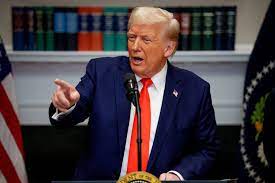
As the clock races toward Donald Trump’s third and final tariff deadline of 1 August, trade anxiety has gripped capitals around the globe. After twice delaying the rollout of sweeping tariffs, the U.S. president has now confirmed that there will be “no further extensions.” He’s framed the date as a milestone — “a big day for America” — and doubled down on his America First doctrine.
Behind the headlines and tweetstorms lies a much messier picture. Some nations have secured partial deals with painful concessions. Others, including long-standing U.S. allies, face looming economic fallout. And the courts may yet upend the whole process.
The Legal Cloud: Trump’s Tariff Power Faces Court Test
Even as Trump prepares to implement new levies, his authority is under legal scrutiny. Hours before the tariffs are due to take effect, the U.S. Court of Appeals for the Federal Circuit will hear arguments challenging the president’s right to impose them. If the court rules against him, it could throw the entire framework — and months of negotiations — into chaos.
Allies in the Crosshairs: No Deal, High Risk
Australia, Taiwan, New Zealand: Allies With No Clarity
Despite being close security and economic partners of the U.S., these nations remain in limbo. No deals have been signed, yet no specific tariffs have been threatened. The silence has only heightened uncertainty, especially as global supply chains prepare for disruptions.
The Political Punishment List: Countries Facing Tariff Threats
Brazil: Trade Surplus Doesn’t Buy Immunity
Trump is slapping a 50% tariff on Brazilian goods — not for economic reasons, but political ones. He linked the move to what he dubbed a “witch-hunt” against Jair Bolsonaro, Brazil’s former president. Brazilian President Lula da Silva has warned against creating a “lose-lose” scenario but has not backed down in his criticism of Trump, calling him an “emperor.”
India: Friend or Foe?
Despite calling India a “friend,” Trump has greenlit a 25% tariff, plus a “penalty” tied to India’s military and energy deals with Russia. With tensions rising in Ukraine, Washington appears ready to punish strategic neutrality.
Mexico: Border Politics Meets Trade
Trump has threatened a 30% tariff on Mexican goods, citing the country’s “failure” to curb drug trafficking. With Mexico being the largest U.S. trading partner, its new president, Claudia Sheinbaum, hopes a last-minute deal can prevent disruption.
Canada: Palestine Policy Sparks Trade Retaliation
Prime Minister Mark Carney has warned that negotiations won’t wrap by the deadline. Trump, furious over Canada’s support for Palestinian statehood, has already imposed 25% tariffs on cars, 50% on steel and aluminium, and threatens 35% tariffs on all other goods not covered by the USMCA.
China: Delayed But Still Dangerous
Talks between the U.S. and China have delayed tariff escalations, but no breakthrough has emerged. China has retaliated with its own tariffs and export controls on rare earth materials vital to U.S. tech and defense — escalating the tech war and trade standoff.
Winners (Sort of): Countries That Cut Painful Deals
Trump has clinched eight major deals, all with higher tariffs than pre-2025 rates, but lower than the threatened levels. Each deal includes massive investments or concessions from partner countries.
South Korea: $350 Billion to Buy Favor
Seoul will face a 15% tariff, but has pledged $350 billion in U.S. investments and $100 billion in energy purchases. It’s a steep price, especially for a newly elected President Lee Jae Myung, who took office after a snap election.
European Union: High Costs for a Fragile Truce
A deal was struck on Sunday with a 15% base tariff on autos, pharma, and semiconductors. In exchange, the EU will spend $750 billion on U.S. energy and make substantial American investments. European leaders are fuming: France called the deal “unbalanced,” and Germany warned of “considerable negative repercussions.”
Japan: Auto Sector Takes a Hit
Japanese exports to the U.S. — especially autos — will face a 15% tariff, plus 50% on steel and aluminium. In return, Japan will invest $550 billion in the U.S. economy, marking one of the largest foreign commitments to date.
UK: Beef and Ethanol In, Steel Still Out
The UK has accepted a 10% base tariff, with carveouts still being negotiated for steel and aluminium. In return, Britain opened its markets to U.S. ethanol and beef, prompting a backlash from domestic farmers.
Vietnam: Crackdown on Transshipment
Vietnam accepted a 20% tariff on its exports, with a punitive 40% tariff on transshipped goods. U.S. imports into Vietnam, however, will remain tariff-free, and Vietnam agreed to monitor re-routing of third-country goods more closely.
Indonesia: Energy Trade for Tariff Relief
Indonesian goods will be taxed at 19%, while nearly all U.S. exports will enter tariff-free. Jakarta also agreed to increase purchases of U.S. oil and industrial products, part of its long-term pivot toward Washington.
Philippines: Tech Sector Feels the Pinch
Filipino exports — especially in hi-tech goods and apparel — will face a 19% tariff, a tough blow for its manufacturing economy. No significant offsetting investment has been announced.
Pakistan: Oil Diplomacy Pays Off
Islamabad secured a last-minute deal reducing the previously threatened 29% tariff. In return, the U.S. will assist Pakistan in developing its domestic oil reserves, boosting energy independence and economic resilience.
The Bigger Picture: What It Means for CEOs, Supply Chains, and Consumers
Trump’s new global trade architecture is built on transactionalism, tariffs, and leverage — not free trade. While some CEOs have welcomed the policy clarity, many are bracing for higher input costs, consumer price inflation, and complexity in cross-border planning.
Supply chains are being redrawn in real-time, with Southeast Asia and Latin America caught between Chinese and U.S. influence. American firms may benefit from nearshoring and domestic investments, but they’ll also face higher costs in the short term — unless subsidies follow.
A New Trade Era — But With Real Risk
Donald Trump has reasserted his power over global trade with a mix of deal-making, brinkmanship, and punishment. While he claims it’s a “big day for America,” for many of America’s closest partners, it’s a day of difficult choices and economic recalibration.
With tariffs now locked in for much of the globe and legal challenges still pending, CEOs and policymakers alike must plan for a more fragmented, politicized, and high-cost international trade landscape.