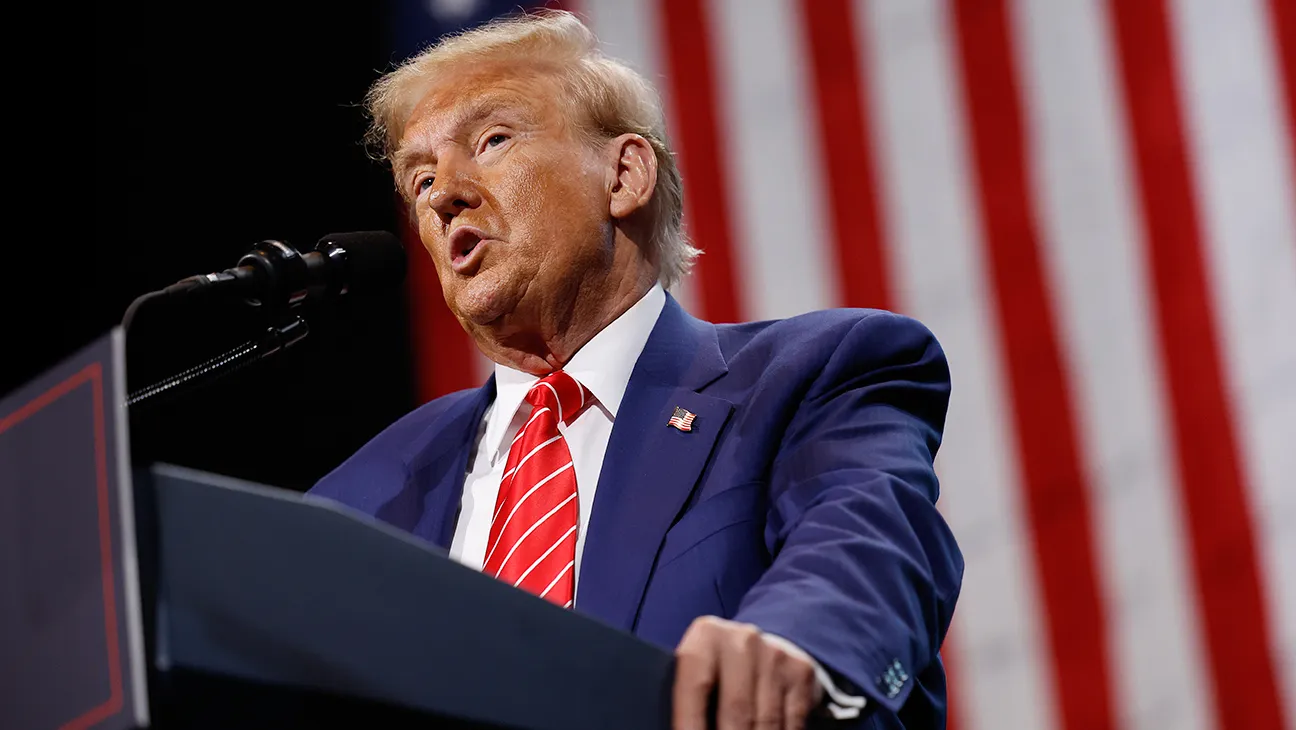
Trump’s Unconventional Approach to Staffing Washington
Donald Trump’s presidency is known for its bold, unpredictable moves, and it seems that his approach to staffing Washington is no different. As President-elect, Trump is already making waves by targeting positions that are typically insulated from political change — long-term positions that are not usually subject to presidential whims. His strategy signals a dramatic departure from tradition, with the incoming administration focusing not only on new appointments but also on firing those who are meant to hold fixed-term positions.
In an unprecedented move, Trump is looking to reshape key federal agencies and positions that aren’t set to be vacated for years. He is making his intentions clear: no political office, regardless of its tenure, is safe if it doesn’t align with his agenda.
The Firing Plan: Going After Fixed-Term Appointees
IRS Commissioner Danny Werfel: One of the most striking moves involves replacing Danny Werfel at the IRS. While Werfel’s five-year tenure still has three years left, Trump plans to install a new nominee. Former congressman Bill Long is reportedly being considered for the role. Trump’s reasoning? The administration wants to ensure full control over the IRS during his tenure, particularly after past allegations that the agency was used for political purposes.
FBI Director Christopher Wray: Trump is also eyeing a new FBI Director. Despite Wray being appointed by Trump in 2017, the current Director still has more than two years left in his 10-year term. Wray’s exit was expedited after mounting pressure, leading him to announce his resignation. For Trump, replacing Wray is more than a personnel change — it’s a way to reassert control over a crucial federal agency he believes has gone astray.
Trump’s approach is consistent with the growing influence of the unitary executive theory — a concept that places all executive power firmly in the hands of the president, arguing that a president should have the right to remove anyone in the executive branch if it helps to further his policies and hold the bureaucracy accountable.
Breaking Tradition: Why Fixed-Term Appointments Are at Risk
Traditionally, fixed-term offices were designed to be insulated from political pressure. These offices, such as those at the FBI, IRS, and Social Security Administration, were meant to stay above the political fray, offering stability and continuity regardless of which party was in power. The theory behind such appointments is that they allow for impartial decision-making and prevent agencies from becoming political tools.
However, with Trump’s rising influence and the unitary executive theory gaining traction, the long-standing political norms regarding these positions are being tested. Critics of this approach warn that undermining these protections could lead to agencies that act more like political extensions of the president rather than independent entities designed to serve the public.
David Lewis, a political scientist at Vanderbilt University, explains, “The downside of making agencies independent is that they can go rogue in ways that are inconsistent with what elected officials or voters want.” Trump’s response? His belief that the FBI has gone rogue and needs to be brought under control.
The Political Implications of Trump’s Decisions
In the past, incoming presidents have refrained from removing people in fixed-term positions unless they were accused of wrongdoing or there was clear misconduct. But Trump’s strategy reveals a shift towards an even more direct approach, where loyalty and alignment with the president’s policies take precedence over fixed-term security.
For example, Trump has openly criticized the National Labor Relations Board (NLRB), where Democratic appointees hold a 3-2 advantage. Conservatives urged Trump to act swiftly to ensure that he could replace members who may not align with his economic and labor policies. Fortunately for Trump, a recent turn of events allowed him to make a move. Senate Majority Leader Chuck Schumer failed to renew the term of a Democratic-appointed chair, allowing Trump to appoint his own.
Trump’s History with Fixed-Term Firings
While this is a bold new move, Trump’s past actions have shown that he is no stranger to firing people in key positions. His 2017 decision to oust FBI Director James Comey — an Obama appointee — set the stage for his future approach to executive power. Comey was removed after criticism over his handling of investigations related to both Trump and his opponent, Hillary Clinton. Similarly, President Biden continued the trend by firing Social Security Commissioner Andrew Saul, who had been appointed by Trump himself.
Trump’s new moves in 2024 are simply another chapter in his consistent strategy of reasserting control over agencies and positions that typically offer stability beyond his term. He has made it clear that if he feels an official doesn’t align with his values or policies, they are expendable.
Trump’s Plans for the IRS and FBI
As for the IRS, Senator Ron Wyden from Oregon has expressed his concern that firing Werfel would be nothing more than an attempt to replace someone who isn’t malleable with someone more loyal to Trump’s agenda. Wyden believes Werfel has significantly improved customer service and audits and deserves to complete his tenure. However, Trump sees things differently, and insiders suggest that replacing him would be a strategic move to install someone more aligned with his vision for the IRS.
Similarly, Trump’s nomination of Kash Patel to replace Christopher Wray at the FBI signals his intent to install people who will follow his lead. Patel’s background includes experience at the Justice Department and on the White House National Security Council, and while some Republicans view him as a potential wrecking ball who will reshape the FBI, Democrats are concerned that his appointment will further politicize the agency.
Navigating the Road Ahead
Trump’s stance on fixed-term appointments is part of a broader philosophy that allows him to consolidate power and reassert his authority over key federal agencies. His firing of longstanding officials, even before taking office, has rattled many who believed such positions were secure from political interference.
Looking ahead, the political landscape is likely to change. The trend of political loyalty and executive power consolidation will likely set the stage for more battles over the independence of agencies and the control of administrative positions. For Trump, his actions represent an opportunity to fully reshape Washington in his image, breaking with tradition to assert his vision for the country’s future.