Cities in Crisis Over Federal Immigration Crackdown
The city of Los Angeles has become the epicenter of a growing national clash over immigration enforcement, with local leaders urgently calling for the Trump administration to halt stepped-up immigration raids that have sparked mass protests, curfews, and a massive military deployment.
Dozens of mayors from across Southern California stood united on Wednesday, demanding that President Donald Trump end what they call “militarized immigration policing.” Their calls, however, have so far fallen on deaf ears.
National Guard and Marines Mobilized in Unprecedented Numbers
Troop Presence Sparks Fears of Escalation
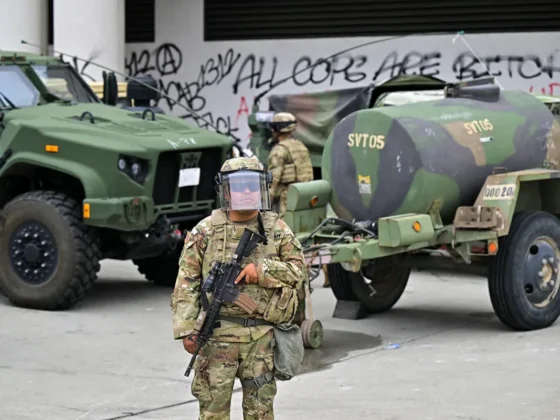
In a move that has drawn bipartisan concern, President Trump has deployed nearly 5,000 military personnel—including National Guard troops and Marines—to Los Angeles. Initially tasked with protecting federal buildings, many of these troops are now accompanying ICE agents on immigration operations, according to Maj. Gen. Scott Sherman.
Sherman, who is leading the deployment, confirmed that around 500 troops have received specific training to support immigration enforcement efforts. While military personnel are not authorized to make arrests, they can detain individuals temporarily if they are seen as a threat to officers or federal agents.
Protests Turn Violent as Curfews Enforced
Police and Protesters Clash in Downtown LA
Tuesday night saw a dramatic escalation as Los Angeles police, some mounted on horseback, enforced a strict downtown curfew. Demonstrators, many protesting peacefully, were dispersed using batons and crowd-control projectiles. One young woman was seen writhing in pain after being struck in the hip by a projectile.
Witnesses like Raymond Martinez described the situation as calm until the group reached the federal building. “It was chill the whole time,” Martinez said. “Then the horses started coming.”
Curfew Extended Indefinitely
Mayor Karen Bass stated that the city’s nightly curfew—currently affecting a 1-square-mile area of downtown—will remain in place “as long as necessary.”
“If there are raids that continue, if there are soldiers marching up and down our streets, I would imagine that the curfew will continue,” Bass said at the joint press conference with other mayors.
Emotional Appeals from Local Leaders and Families
Vice Mayor Hit by Rubber Bullets Urges Peace
Vice Mayor Brenda Olmos of Paramount shared an emotional plea, revealing that she was personally struck by rubber bullets over the weekend while protesting.
“I’m asking you, please listen to me, stop terrorizing our residents,” Olmos said, her voice cracking with emotion. “You need to stop these raids.”
Families of Detained Workers Speak Out
At a separate event in Culver City, families of detained car wash workers expressed fear and sorrow. Jaslyn and Kimberly Hernandez, daughters of a detained worker, embraced tightly during a press conference, highlighting the human toll behind the immigration raids.
Legal Battle Looms: California Takes Trump to Court
Governor Newsom Seeks Emergency Halt to Military Deployment
California Governor Gavin Newsom is seeking an emergency federal injunction to block the military from assisting immigration enforcement within city limits. The governor called the deployment a “military dragnet,” accusing the Trump administration of using the military to enforce political agendas.
A federal judge has scheduled a court hearing for Thursday to review the legality of this expanded military role.
The Trump administration responded sharply, labeling the lawsuit a “crass political stunt endangering American lives.”
Uncertainty Around Troop Authority and Use of Force
Confusion Over Detentions
Maj. Gen. Sherman caused some confusion when he initially stated that National Guard troops had detained civilians. He later walked back that statement, acknowledging that his comments were based on video footage that did not actually depict National Guard members in Los Angeles.
Still, concerns persist that the military’s involvement may blur the lines between civil law enforcement and military authority.
What’s Next for Los Angeles?
The situation in Los Angeles remains volatile, with protests expected to continue, legal challenges intensifying, and federal forces still on the streets. For business leaders and civic institutions alike, the moment underscores the tension between local governance and federal enforcement—and the cost of conflict in America’s second-largest city.
As LA mayors continue to plead for de-escalation, the broader implications of militarized immigration enforcement are rippling far beyond California’s borders.