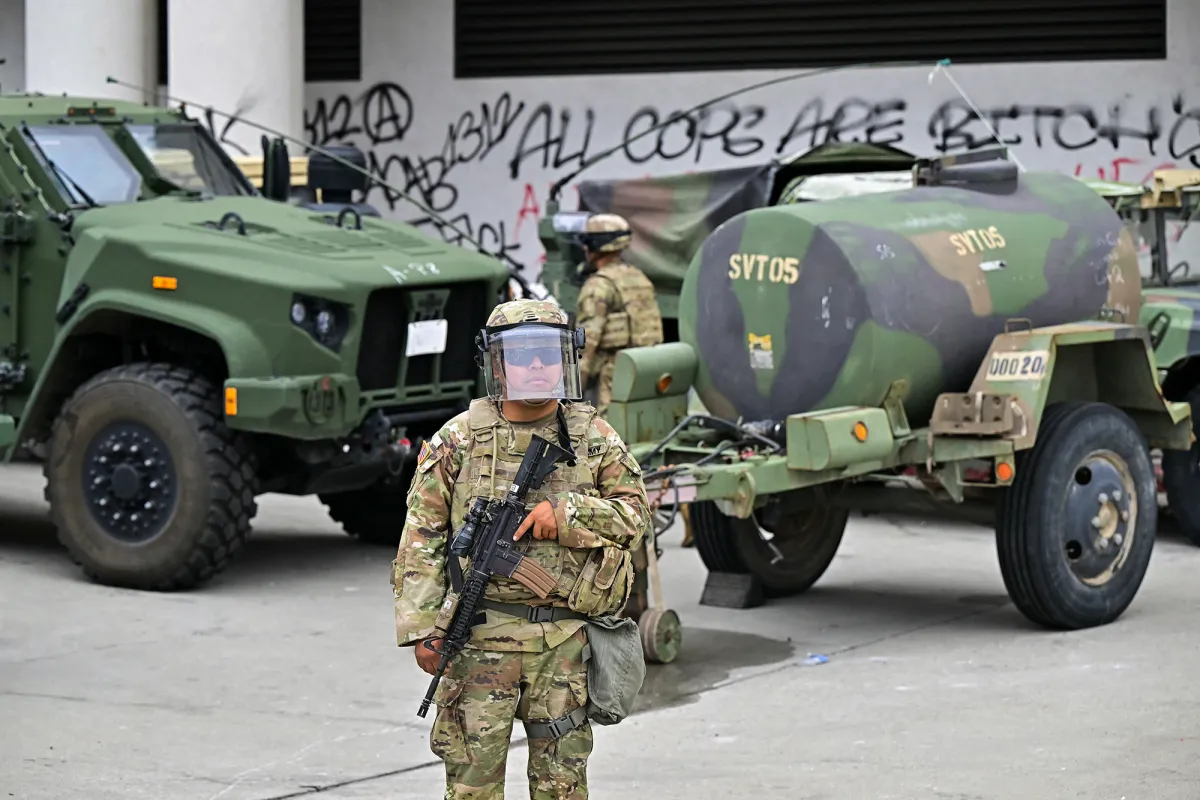
In a dramatic escalation of tensions between federal and state authorities, President Donald Trump has deployed over 4,000 National Guard troops and 700 Marines to Los Angeles to assist with immigration enforcement amid widespread protests. California Governor Gavin Newsom has responded by filing a lawsuit, arguing that the deployment bypasses state authority and violates legal precedents. This confrontation has ignited a national debate over the balance of power between federal and state governments.
The Catalyst: Immigration Raids Spark Unrest
The crisis began on June 6, 2025, when U.S. Immigration and Customs Enforcement (ICE) agents conducted a series of raids across Los Angeles, targeting undocumented workers in various locations, including agricultural areas and urban centers. These operations, reportedly aimed at meeting a daily detention quota of 3,000, were met with widespread condemnation by local officials and advocates who decried the fear and disruption caused. Protests erupted in response, with demonstrators clashing with law enforcement in areas like Compton and Paramount. While most protests remained peaceful, some escalated into violent confrontations, leading to injuries and arrests.
Federal Response: Military Deployment Amidst Protests
In response to the escalating unrest, President Trump invoked Title 10 of the U.S. Code to federalize the California National Guard, deploying 2,000 troops to Los Angeles on June 7. By June 9, an additional 2,000 National Guard members and 700 Marines were sent to the city. The Marines are authorized to assist with immigration enforcement and crowd control, including the authority to detain civilians interfering with federal agents
Governor Newsom criticized the deployment as an overreach, arguing that local law enforcement agencies were capable of maintaining order without federal intervention. He described the move as politically motivated and an abuse of power, asserting that it was intended to intimidate immigrant communities and disrupt local governance .
Legal Battle: State vs. Federal Authority
The confrontation has escalated into a legal battle. On June 9, Governor Newsom filed an emergency motion in federal court seeking to block the deployment, arguing that it undermines local jurisdictions and incites civil unrest. The lawsuit contends that the deployment violates the Posse Comitatus Act, which restricts the use of federal military forces in domestic law enforcement, and challenges the legality of bypassing state authority in the activation of the National Guard .
A federal court hearing is scheduled for June 12 to evaluate whether the Trump administration can legally deploy the National Guard and Marines to assist with immigration raids in Los Angeles. The outcome of this case could set a significant precedent regarding the limits of federal power in domestic affairs
National Implications: A Divided Nation
The deployment has sparked nationwide debates over the role of federal authority in state matters. Critics argue that the use of military forces in domestic law enforcement is an authoritarian overreach that undermines democratic principles. Supporters contend that the federal government has a responsibility to enforce immigration laws and maintain order, especially in the face of widespread protests and potential civil unrest.
The situation has also intensified partisan divisions, with Democratic leaders condemning the deployment as politically motivated and harmful to immigrant communities, while Republican leaders defend it as necessary to uphold the rule of law. The ongoing legal proceedings and public discourse will likely continue to shape the national conversation on federalism, civil liberties, and the balance of power in the United States.
The showdown between President Trump and Governor Newsom represents a critical moment in the ongoing debate over the balance of power between federal and state governments. As the legal battle unfolds, the nation watches closely to see how the courts will interpret the limits of federal authority in domestic affairs. The outcome could have lasting implications for the relationship between the federal government and the states, particularly concerning the use of military forces in domestic law enforcement and the enforcement of immigration policies


