Executive Order Sets the Stage
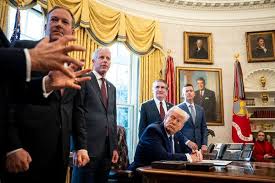
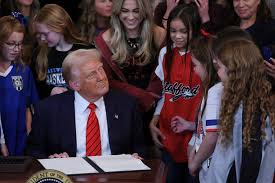
In February 2025, President Donald Trump signed the “Keeping Men Out of Women’s Sports” executive order, a directive aimed at banning transgender women—those who transitioned after being assigned male at birth—from competing in girls’ and women’s sports across the United States.
The order didn’t just create a political firestorm—it also came with teeth. Any sports organization accepting federal funding and allowing trans women to compete in women’s divisions now risks losing its funding entirely.
USOPC Quietly Falls in Line
Now, the United States Olympic and Paralympic Committee (USOPC) has quietly implemented the order. Without a press conference or headline-grabbing statement, the policy was simply updated under the “USOPC Athlete Safety Policy” on its website on Monday, July 21, 2025.
In a letter to the nearly 50 national governing bodies (NGBs) under its jurisdiction—including those for track and field, swimming, fencing, and others—USOPC leaders Sarah Hirshland (CEO) and Gene Sykes (President) wrote:
“As a federally chartered organization, we have an obligation to comply with federal expectations… Our revised policy emphasizes the importance of ensuring fair and safe competition environments for women.”
The message is clear: all governing bodies must align their eligibility rules with the new federal standard, or risk being pushed out of the U.S. Olympic ecosystem.
Who Is Affected?
This decision directly affects elite transgender women athletes vying for a spot on U.S. women’s Olympic teams, but it also cascades down to youth, amateur, and local levels of sports governance:
USA Fencing has already moved to bar trans women from women’s events beginning August 1, 2025.
USA Swimming has acknowledged the new policy and is currently reviewing the required changes.
USA Track & Field is likely to follow suit, pending final guidance from its world governing body.
The new norm for women’s sports under USOPC jurisdiction is becoming this:
Only those assigned female at birth will be eligible for women’s categories.
The Political Context
This policy rollout is part of a broader culture war playing out in real time. Over two dozen U.S. states have enacted laws restricting or banning transgender girls and women from competing in girls’ and women’s sports. Legal battles are ongoing in several of those states.
Trump and his allies have framed the issue as one of “fairness to biological women,” often using emotionally charged rhetoric to mobilize their base. In Trump’s own words:
“The IOC needs to change everything having to do with this absolutely ridiculous subject.”
The NCAA, facing similar federal pressure, also changed its trans athlete eligibility policy earlier this year, restricting women’s competition to those assigned female at birth—echoing USOPC’s current move.
Global Olympic Implications
The International Olympic Committee (IOC) has so far allowed each individual sports federation to set its own eligibility rules regarding transgender athletes. That decentralized approach has led to:
World Aquatics (swimming): Bans trans women who experienced male puberty
World Athletics (track & field): Similar ban, recently extended to more events
Union Cycliste Internationale (cycling): Now restricts female categories by sex at birth
FIFA (soccer): Currently reviewing policies, with testosterone thresholds under consideration
The IOC’s new president, Kirsty Coventry, has signaled a priority to “protect the female category”, suggesting that a more uniform global policy may emerge ahead of the 2028 Los Angeles Olympics.
Legal & Ethical Backlash
While supporters of the policy frame it as a move toward fairness, critics argue it’s discriminatory and politically motivated. The National Women’s Law Center (NWLC) issued a statement blasting the USOPC for bowing to political pressure:
“By giving in to political demands, the USOPC is sacrificing the needs and safety of its own athletes.”
Opponents warn the order targets a tiny minority of athletes—there are currently no known transgender athletes in the NWSL (National Women’s Soccer League) or many Olympic pipelines—suggesting the move is more symbolic than practical, with deeply stigmatizing effects.
What Happens Now?
The federations under the USOPC umbrella must now revise their policies to maintain their standing. Local sports clubs, high schools, and youth leagues affiliated with these national bodies may also be compelled to follow suit to maintain eligibility, funding, or competitive access.
This leaves many transgender athletes—especially those in transition or youth categories—facing a dilemma:
Compete in open or men’s divisions (often with less support or visibility)
Exit competition entirely
Challenge the policy through courts or advocacy campaigns
Strategic Takeaways for CEOs, Leaders & Advocates
For Policy Leaders:
Compliance Risk: Any institution tied to Olympic or NCAA structures must now assess its eligibility policies, especially if it receives federal funding.
Brand Risk: Companies sponsoring Olympic athletes should prepare for increased media scrutiny and potential boycott campaigns from either side of the political aisle.
For DEI & HR Executives:
Expect more pressure to take positions on gender inclusion in company-sponsored sports programs.
Legal teams should review how policies intersect with Title IX, civil rights, and employment discrimination law.
For Advocacy Groups:
Legal action may challenge these bans as violating constitutional protections or federal civil rights law, especially around equal access.
The New Era of Gender in Sports Has Arrived
The USOPC’s quiet move to align with Trump’s sweeping executive order on transgender athletes signals the most consequential shift in American Olympic policy in decades.
What was once a fringe culture war issue has now redefined national eligibility standards—potentially locking out a generation of transgender athletes and forcing every level of organized sport in the U.S. to redraw their boundaries.
As the 2028 Los Angeles Olympics approach, the debate isn’t going away. If anything, this is only the beginning.