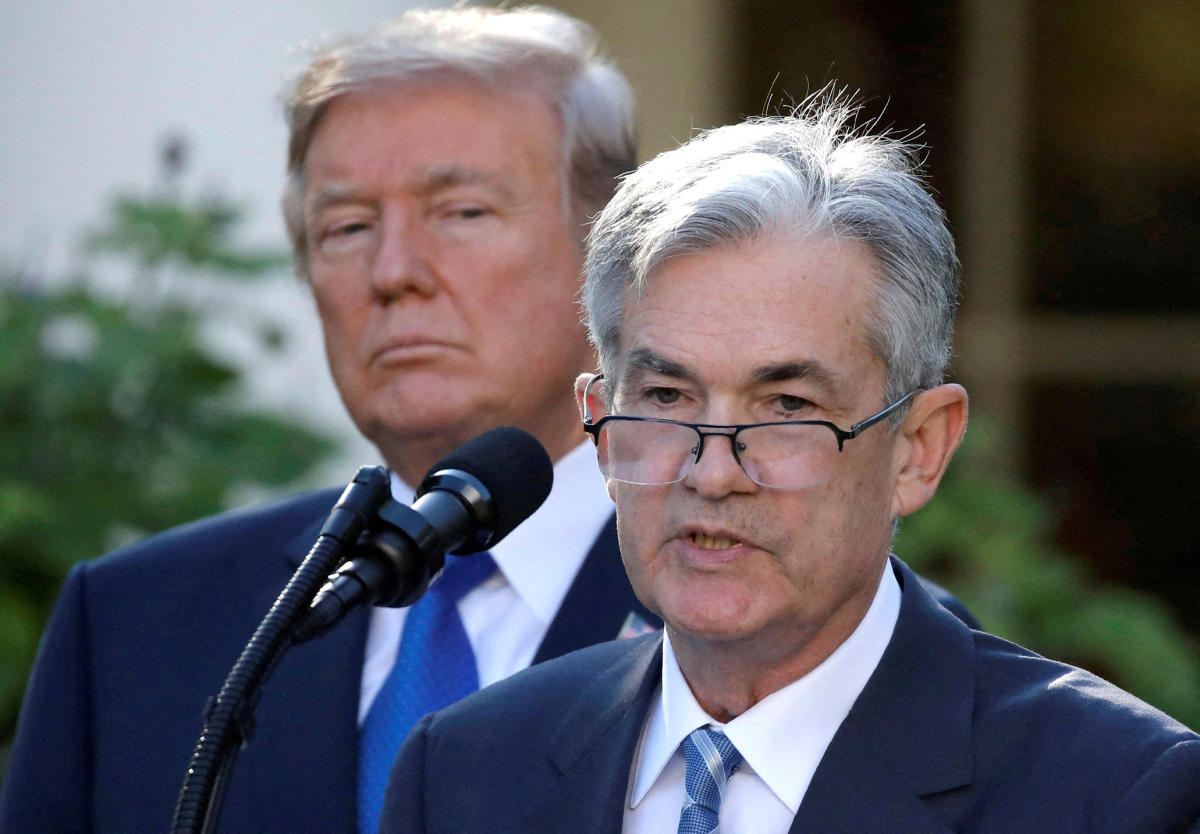
The Fed Faces a New Challenge in 2025: ‘Policy Dependent’ or ‘Data Dependent’?
Federal Reserve Chair Jay Powell has been known for his consistent and clear messaging on the independence of the Fed, especially when it comes to political matters. After the most recent U.S. presidential election, Powell reaffirmed that the Fed’s policy decisions would be solely based on economic data, without any influence from political factors, including the election. He stated, “The election will have no effects on our policy decisions,” and “We don’t comment on fiscal policy.”
However, as we look ahead to 2025, Powell may be faced with a new reality — that of a potential second term under former President Donald Trump. In this scenario, the Fed may no longer have the luxury of remaining purely “data dependent” in its decision-making. With an economic landscape shaped by Trump’s policy choices, fiscal matters will inevitably intersect with monetary policy, making it challenging for the Fed to avoid considering these factors.
The Economic Backdrop: Solid but Uncertain
As it stands, the U.S. economy remains relatively resilient, with the latest inflation data—most notably the consumer and wholesale price indexes—staying above 3%. This is well above the Federal Reserve’s target inflation rate of 2%. Even without the specific policy proposals from a potential second Trump term, the current economic backdrop offers both stability and concern.
Torsten Sløk, the chief economist at Apollo, believes that the Fed will need to keep interest rates higher for a longer period due to the resilience of the economy. “If the main areas where new policies might come into play—lower taxes, more tariffs, and restrictions on immigration—happen to be the case, textbook economics would predict that all of those factors would put upward pressure on inflation,” Sløk told Yahoo Finance.
This is where fiscal policy, particularly Trump’s policies, could start to play a more prominent role in how the Fed addresses economic conditions. The Fed has historically been slow to react to fiscal changes, but with Trump’s aggressive fiscal proposals, it may need to reassess its stance.
Will Trump’s Economic Agenda Affect Inflation?
Former President Trump’s economic policies raised questions about inflationary pressures during his first term. Many of the proposals that might come with a second Trump term — such as tax cuts, more tariffs, and stricter immigration policies — have the potential to contribute to inflationary pressure.
For instance, new or extended tax cuts could inject more money into the economy, increasing demand for goods and services, while tariffs on imports would likely raise the cost of many consumer products, further adding to inflation. In the context of these possible policy moves, the Fed may be forced to consider more than just economic data, acknowledging the direct impact of fiscal policy on its monetary decisions.
The Fed’s Dilemma: Balancing Monetary Policy with Fiscal Influence
While Powell has emphasized that the Fed’s job is to maintain price stability and full employment, fiscal policy has long been a tool used by Congress and the President to steer the economy. The Fed typically operates independently from the political process, avoiding any direct involvement in policy matters. However, as fiscal policy becomes more aggressive—especially with Trump’s potential tax cuts or tariffs—it’s harder for the Fed to isolate its monetary decisions from these fiscal developments.
In his 2019 statement, Powell was careful to distinguish the Fed’s role in dealing with trade policy. At that time, the U.S. was dealing with trade tensions, which had a noticeable impact on the economy and financial markets. Powell made it clear that the Fed’s focus was on how these trade tensions influenced the broader economy, not on the trade policies themselves.
However, as fiscal policy becomes more impactful in the years ahead, Powell and the Fed may be forced to reconsider their approach. It will be difficult for them to ignore how fiscal policy—especially policies introduced by a President Trump administration—might influence the inflation rate, the job market, and overall economic conditions.
Will Trump’s Second Term Shift the Fed’s Role?
Given the current economic landscape and potential shifts under a Trump administration, it’s likely that the Federal Reserve will need to expand its role beyond traditional “data dependence.” Fiscal policy is too significant to ignore in 2025, and the Fed may have to reassess how it makes decisions in light of a more aggressive fiscal environment.
If Trump were to reenter office with his plans for mass deportations, increased tariffs, and more tax cuts, the economic consequences could be profound. Historically, these types of policies have tended to lead to inflationary pressure. For instance, tariffs raise the cost of goods and services, which can contribute to higher prices for consumers. Tax cuts, on the other hand, can stimulate demand in the economy, leading to more inflationary pressure if supply doesn’t keep up with demand.
The Fed’s job, of course, is to maintain price stability and full employment, but how can it effectively manage this dual mandate if fiscal policy is pushing against its efforts to contain inflation? As we look to 2025 and beyond, Powell may find himself in a position where the Fed needs to balance both monetary and fiscal policy in its decision-making.
Powell’s Reluctance to Address Fiscal Policy
Jay Powell has long been careful to avoid commenting on fiscal policy. He has made it clear that the Fed’s role is not to assess or evaluate fiscal decisions but to respond to how these policies affect the broader economy. In his 2019 press conference, Powell stated, “We play no role whatsoever in assessing or evaluating trade policies other than as trade policy uncertainty has an effect on the U.S. economy in the short and medium term.”
However, as fiscal policy becomes more intertwined with the broader economic landscape in 2025, Powell’s reluctance to engage with these issues will likely become increasingly difficult. With the potential for tax cuts, trade policies, and immigration restrictions under a Trump presidency, Powell may have to reassess his stance and be more “policy dependent” than ever before.
Conclusion: A New Era for the Federal Reserve?
The Federal Reserve has long prided itself on making policy decisions based on data rather than political pressures. However, as fiscal policies—especially under a potential second Trump term—become more aggressive, the Fed may find itself in a position where it cannot ignore these policies’ effects on inflation, employment, and overall economic stability.
The next few years will likely see a shift in how the Fed responds to fiscal policies. Powell and his team may have to embrace a “policy dependent” approach to ensure the economy remains stable as the political landscape changes. The Fed’s dual mandate of price stability and full employment will require navigating both monetary and fiscal considerations in the years to come.