FBI Investigates Smuggling, Corruption, and Deaths at Immigration Detention Center in New Mexico
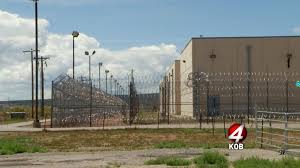
As the Trump administration ramps up its interior immigration enforcement efforts, one of the country’s most controversial private prison operators—CoreCivic—is under intense FBI scrutiny. A sprawling federal investigation has revealed what agents are calling a “drug trafficking epidemic” inside the Cibola County Correctional Center (CCCC) in New Mexico, where both U.S. Marshals detainees and Immigration and Customs Enforcement (ICE) detainees are held.
Fifteen detainee deaths. Drugs smuggled in boots. Alleged gang networks. A multi-agency investigation. And through it all, CoreCivic is pushing forward with efforts to expand its immigrant detention contracts.
Welcome to the Cibola crisis.
CoreCivic’s Quiet Expansion Amid Growing Scandal
ICE Population Rises as FBI Probes Drug Network
In late 2024, CoreCivic was actively pitching its Cibola facility to ICE as a scalable solution to rising arrests—even as the FBI was deep into a criminal probe exposing widespread smuggling, corruption, and violence inside the same walls.
In a pitch document obtained via an ACLU FOIA request, CoreCivic proposed that ICE increase its share of the 1,129-bed facility, touting Cibola as an “ideal” location for detention growth. Yet FBI affidavits filed around the same time paint a starkly different picture.
An agent described a “drug trafficking epidemic”, including evidence of guards smuggling in meth and Suboxone—a narcotic used in opioid treatment that also produces a mild high. Court filings describe correctional officers hiding drugs in boots and delivering them during routine cell checks.
Despite redactions, the FBI documents suggest CoreCivic was likely aware of the investigation. Members of CoreCivic’s internal intelligence unit even cooperated with the FBI, indicating a tacit acknowledgment of the facility’s escalating problems.
How Drugs Enter a “Secure” Federal Prison
COs, Gangs, and Contraband in the Shadows
One affidavit describes a correctional officer hiding drugs in his footwear, bypassing security, and planting narcotics in a cell during a staged inspection. FBI informants allege the facility is plagued by “dirty COs,” gang-affiliated dealers, and a network for trafficking drugs and contraband.
What’s more troubling is that this crisis spilled into ICE detention units, once thought to be isolated from the broader chaos affecting U.S. Marshals Service (USMS) and county inmates.
In one chilling incident, two ICE detainees received an envelope—posing as legal mail—that contained thin strips of paper laced with narcotics. When a known dealer discovered the envelope had been misdelivered, he reportedly threatened to kill both men unless they accepted a $500 bribe. When they tried to report it, CoreCivic guards allegedly ignored them. Days later, the dealer beat both men and smeared feces on one—a brutal act of intimidation.
CoreCivic’s Response: Denials, Deflections, and “Zero Tolerance”
Public Statements Clash with FBI Affidavits
CoreCivic, the second-largest private prison company in the U.S., has publicly rejected the allegations. In a statement to The Guardian, it claimed to uphold a “zero-tolerance policy” toward contraband and emphasized that it “provides a safe, humane and appropriate environment.”
But that narrative is contradicted by data: 15 detainees have died at Cibola since 2018, including several from drug overdoses or suicides that many experts say could have been prevented.
“The number of deaths in custody is deeply alarming,” said Eunice Cho, senior staff attorney at the ACLU’s National Prison Project. “That’s a significant red flag for systemic failure.”
Even CoreCivic’s history at Cibola raises concerns. The company lost its Bureau of Prisons contract in 2016 following a series of medical neglect scandals and questionable deaths. Yet, months later, the facility reopened with a new contract—this time under ICE and the U.S. Marshals.
DHS Denial vs. Detainee Testimonies
ICE Insists There Are “Zero Drugs”—Despite Firsthand Accounts
The Department of Homeland Security (DHS), which oversees ICE, flatly denied the presence of drugs in its portion of the facility.
“Allegations that drug smuggling is taking place in the ICE Section… are FALSE,” stated Tricia McLaughlin, DHS assistant secretary. “There has not been a single report of drugs within the ICE section of the facility.”
But that claim runs counter to eyewitness reports from detainees who say drug use and sales are rampant, even in the ICE unit. Interviews reveal substances entering through the kitchen or via misrouted mail—sometimes intentionally.
“Last year, we believed the drug problem was isolated to the US Marshals’ side,” said Sophia Genovese of Georgetown University. “But that’s no longer true. We now have ICE detainees reporting active drug trafficking in their own units.”
Financial Gains Despite Public Failures
How CoreCivic Is Cashing In Amid Controversy
CoreCivic has not only kept its ICE contract for Cibola—it has expanded its immigration detention portfolio throughout 2025. The company has added seven new contracts and purchased an additional facility from another private operator.
According to May 2025 contract documents, ICE even increased its per-bed payment to CoreCivic for services at Cibola, further incentivizing detention expansion despite ongoing investigations and mounting deaths.
The Guardian reached out to CoreCivic for comment on these new numbers. The company did not respond.
The Human Cost of Private Detention
Deaths, Fear, and Feces-Fueled Assaults
Since 2018, at least 15 detainees have died at Cibola. That figure includes individuals in both ICE and USMS custody, many of whom died under suspicious or medically negligent circumstances. Legal advocates say that number, relative to the facility’s size, is alarmingly high.
Most recently, ICE’s detainee population at Cibola increased from 160 in January to 224 in late June, with spikes as high as 405 in April, according to data from Syracuse University’s Austin Kocher.
The facility has a capacity of around 1,200 beds, but insiders say it is dangerously understaffed and mismanaged.
“Our biggest concern has always been the lack of adequate medical care,” Genovese said. “Now we’re seeing that it’s not just health—it’s safety and survival.”
What’s Next for Cibola—and CoreCivic?
FBI Silent, But the Scandal Isn’t Over
The FBI has not commented on whether its investigation remains active. The U.S. Attorney’s Office in New Mexico confirmed that the probe is ongoing but declined to provide further details.
For now, CoreCivic continues to house hundreds of federal detainees—and is still on ICE’s shortlist for detention expansion.
As Washington debates the future of private immigration detention, Cibola stands as a cautionary tale: where political priorities, private profit, and public accountability have violently collided—with tragic consequences.