A ‘Beautiful’ Vision or a National Flashpoint?
As Los Angeles streets fill with protesters opposing federal immigration raids, Republicans in Washington are pushing forward with legislation that promises to transform America’s immigration enforcement landscape. President Donald Trump’s signature initiative, now branded the “Big Beautiful Bill” (BBBill), combines sweeping immigration measures with key domestic promises—including tax relief on tips.
Trump’s backers praise the bill as a long-overdue investment in border security and federal law enforcement. Critics warn it represents an unprecedented expansion of detention facilities, militarization of local conflicts, and a dangerous precedent for civilian-military relations.
The Heart of the Bill: Massive ICE Expansion
$70 Billion Enforcement Surge
The BBBill earmarks $70 billion to dramatically scale up the federal immigration system:
$45 billion for new ICE detention centers, a staggering increase compared to the current fiscal budget.
$27 billion for ICE enforcement and deportation operations, including funding to hire 10,000 new ICE officers over the next five years.
Republican House Speaker Mike Johnson championed the legislation, calling the funding “much-needed reinforcements” for federal officers. “It’s those men and women, the federal law enforcement officers, who deserve our support right now,” Johnson told reporters.
The American Immigration Council, a key critic, flagged the bill’s enforcement priorities, warning of potential human rights concerns and overreach.
The L.A. Connection: Tying Protests to Policy
The GOP has been strategically linking the bill to the recent ICE raids and ensuing protests in Los Angeles, positioning the legislation as a direct response to rising local resistance.
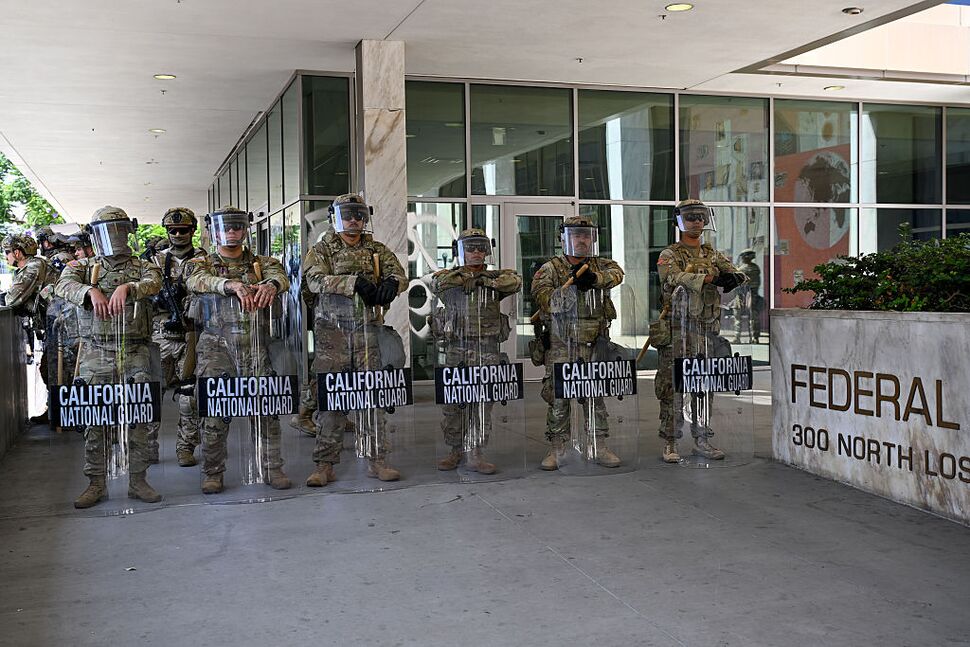
The protests, which saw thousands gather outside the Los Angeles Federal Building on June 9, have become a national flashpoint. Trump’s decision to deploy the National Guard and Marines to the city over California Governor Gavin Newsom’s objections has further inflamed tensions.
This move marks the first time in over sixty years that a president has federalized National Guard forces against the wishes of a sitting governor.
Fractures Within the GOP: A Bill on the Edge
Despite Republican leadership’s strong support, the bill faces internal challenges:
The House Freedom Caucus is pressuring Senate Republicans to toughen the legislation further, especially demanding rollbacks of green energy investments from President Biden’s Inflation Reduction Act.
More moderate Republicans in both chambers are calling for a more balanced approach, creating potential friction that could derail the bill.
The legislation passed the House by a single vote. In the Senate, the GOP can afford to lose no more than three votes if Democrats remain united in opposition.
Elon Musk’s Influence
Complicating the GOP’s path is Elon Musk’s public criticism of the bill, which may sway some libertarian-leaning conservatives. Musk has recently argued against expansive government surveillance and federal overreach, particularly when tied to mass enforcement programs.
The National Guard Gambit: New Military Role in Immigration
Trump’s decision to deploy the National Guard signals a major escalation in the federal approach to immigration enforcement.
Defense Department Endorsement
Defense Secretary Pete Hegseth told Congress that the administration envisions an expanded homeland role for the National Guard and Reserves.
“We’re entering another phase where the Guard becomes critical to securing the homeland,” Hegseth said, hinting that future deployments could become more routine.
Civilian-Military Concerns
National security experts are warning that this blurring of military and law enforcement roles could set a dangerous precedent. Civilian oversight advocates fear the long-term implications of militarizing immigration policy, particularly in Democratic-controlled cities that oppose ICE operations.
Trump’s Stance on Protests: ‘Very Big Force’
The president also issued a blunt warning regarding potential protests at the military parade he has scheduled for Washington, D.C. on Saturday, coinciding with the Army’s 250th anniversary and Trump’s birthday.
“For those people that want to protest, they’re going to be met with very big force,” Trump declared, without distinguishing between peaceful and disruptive demonstrations.
Interestingly, the coalition organizing the NO KINGS Nationwide Day of Defiance has no planned events in Washington, focusing instead on local protests across the country.
“Donald Trump wants tanks in the street and a made-for-TV display of dominance for his birthday,” the coalition said. “We’re rejecting that spectacle by bringing communities together elsewhere to oppose authoritarian politics.”
The Path Ahead: What’s Next for the Big Beautiful Bill?
The BBBill’s future is far from certain. The Senate is expected to heavily modify the bill, and negotiations over green energy rollbacks, military spending, and the immigration provisions could be heated.
Trump is pushing for final passage by July 4, hoping to celebrate the legislation as a centerpiece of his second-term domestic agenda.
If passed in its current form, the bill would:
Greatly expand ICE’s capacity and reach.
Increase the use of federal and military resources in local immigration enforcement.
Potentially deepen the national divide over immigration, states’ rights, and the role of the military on U.S. soil.


