The Reality Check: Inflation Isn’t “On Track”
Trump’s Narrative vs. the Data
This week, the White House issued a memo claiming inflation is “right on track.” Trump doubled down, calling price growth “very low.” But a glance at the latest data tells a different story. The Consumer Price Index (CPI) is ticking upward again — with notable price hikes in June on items like fruit, dresses, toys, and washing machines.
Trump’s re-election promise to quickly reduce inflation is already being tested — and so far, it’s faltering.
The Tariff Effect
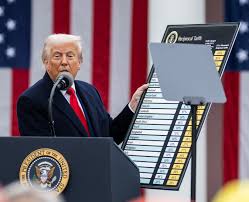
At the heart of this economic turbulence is Trump’s aggressive tariff policy. Under his direction, the U.S. has dramatically increased tariffs on a wide range of imported goods. According to The Budget Lab at Yale, the average effective tariff rate is set to hit 20.6% — the highest since 1910.
Trump maintains that foreign countries will bear the burden. But economic fundamentals say otherwise. Tariffs are paid by U.S. importers, and the costs are passed along the supply chain — eventually hitting the wallets of everyday American consumers.
Businesses Brace for Impact
Supply Chains Under Pressure
From global manufacturers to local retailers, businesses are scrambling to adapt to what many describe as a chaotic and unpredictable trade strategy. The Trump administration’s erratic tariff announcements — often made on Truth Social with little warning — have triggered volatility in supply chains and financial markets.
Lagging Effects, But Real Pain
Federal Reserve Chair Jerome Powell recently highlighted the delayed impact of tariffs. While Trump can announce new duties in an instant, it can take months for those price pressures to filter through the economy. Powell warned:
“Ultimately, the cost of the tariff has to be paid and some of it will fall on the end consumer. That’s what businesses say. That’s what the data says from past evidence.”
The market is only beginning to feel the full weight of these policies.
The Fed’s Standstill: Watching and Waiting
Rate Cuts on Hold
Despite political pressure, the Fed has kept interest rates steady for four straight meetings, waiting to assess the long-term impact of Trump’s trade tactics. While inflation is still above the Fed’s 2% target, officials are treading carefully, choosing not to slash rates prematurely and risk fueling inflation further.
Mixed Economic Signals
Recent data reveals a complicated picture. While consumer price growth accelerated between May and June, wholesale prices showed signs of easing. The Fed’s own “Beige Book” — a regional survey of business conditions — painted a picture of stability amid uncertainty, suggesting the economy hasn’t yet hit crisis mode.
Oxford Economics projects that Trump’s planned tariffs will reduce U.S. GDP growth by 0.1 percentage points in 2025 and 0.3 percentage points in 2026. Inflation will temporarily tick up by about 0.2 basis points, eroding disposable income and dampening consumer spending.
Trump vs. Powell: The Growing Rift
Political Targeting of the Fed Chair
As price hikes mount, Trump is looking for a scapegoat — and Powell has emerged as the prime target. The president has accused Powell of being “too late” to cut interest rates and even floated the idea of firing him. Though Trump originally appointed Powell in 2017, he has since launched a barrage of public attacks.
This week, Trump implied that Powell’s decision to renovate the Fed’s offices at a cost of $2.5 billion might involve “fraud,” even though Powell has already requested an inspector general’s review of the project.
Legal and Political Limits
Firing Powell isn’t as straightforward as Trump might hope. In a May ruling related to other presidential firings, the Supreme Court reaffirmed the Fed’s quasi-private status, making its chair legally difficult to remove. Powell has stated he intends to complete his term, which ends in May 2026.
Eroding Credibility
Bharat Ramamurti, a former deputy director of the National Economic Council, warns that removing Powell would cause more harm than good.
“If you replace Jay Powell with someone who is clearly doing whatever Donald Trump wants them to do, expectations about inflation will spike — and that’s going to create a real problem for the Fed in the long term.”
Undermining the Fed’s independence could shatter investor confidence and risk long-term macroeconomic instability.
What CEOs Should Watch For
Key Market Risks
Tariff Fallout: With tariffs climbing to historical levels, global suppliers and domestic consumers alike will face increasing cost pressure. Expect volatility across retail, manufacturing, and logistics sectors.
Fed Independence: Any move by Trump to fire or sideline Powell could spook markets, drive bond yields higher, and increase the cost of capital.
Consumer Confidence: As prices rise and real disposable income falls, demand-side pressure could depress revenue in sectors reliant on consumer spending.
Strategic Implications
Hedge Supply Chain Exposure: Firms with significant international sourcing should reassess and diversify vendor portfolios to offset tariff shocks.
Prepare for Interest Rate Instability: While the Fed is holding steady now, political interference could lead to unorthodox rate shifts or even policy paralysis.
Monitor Regulatory Backlash: A showdown between Trump and the Fed could spark bipartisan congressional scrutiny or regulatory tightening — particularly if Wall Street reacts poorly.
A Dangerous Game with America’s Economy
Trump’s trade policy gamble — and his intensifying feud with Jerome Powell — is shaping up to be a defining economic battleground of his presidency. With tariffs pushing inflation upward, and the White House openly questioning the Fed’s credibility, the balance of economic power is under stress.
The message to CEOs is clear: prepare for a bumpy road ahead. Whether Powell survives politically or not, the ripple effects of this standoff will shape U.S. markets well into 2026. If the central bank loses its independence or public trust, America could face more than just price hikes — it could risk its standing as the world’s financial safe haven.